
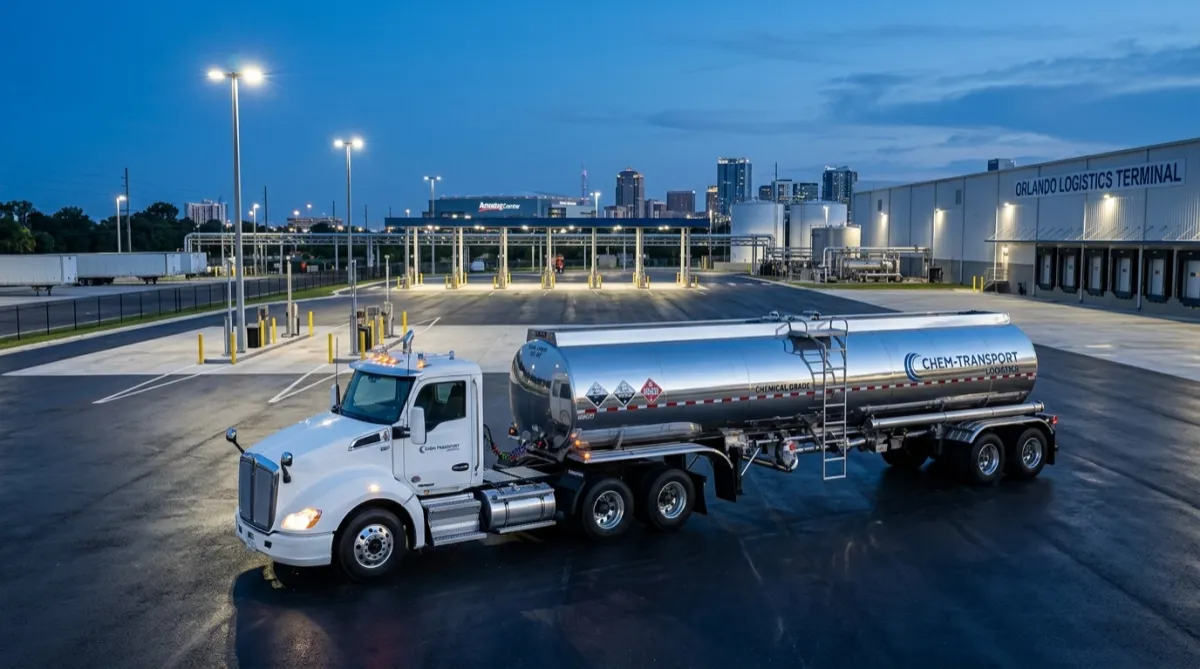
Supply chain resilience is no longer a secondary consideration for logistics managers in the Southeast. For industries relying on the movement of non-hazardous bulk liquids—such as food-grade oils, industrial chemicals, and liquid fertilizers—the ability to adapt to port congestion and inland bottlenecks is critical. Orlando has emerged as the central node for these operations in Florida.
As a quintomodal transportation hub, Orlando provides the infrastructure necessary to maintain a steady flow of liquid commodities. American Tank Lines leverages this geographic advantage to provide bulk liquid transport solutions that prioritize predictability and transparency. This article examines why Orlando is the cornerstone of a resilient liquid supply chain and how specialized transport providers maintain service standards in a volatile market.
The Strategic Intersection of Central Florida
Orlando’s position at the center of the Florida peninsula makes it a natural hub for bulk liquid storage and transit. The region serves as the intersection for major arterial routes, including I-4, Florida’s Turnpike, and the Beachline Expressway (SR 528). This connectivity allows for rapid distribution to both the Atlantic and Gulf coasts.
For shippers, this means reduced lead times. When cargo arrives at Port Tampa Bay or JAXPORT, having a central staging ground in Orlando allows for more flexible dispatching. If one corridor faces a closure or significant delay, Orlando-based fleets can reroute through alternative highway systems with minimal impact on the ETA.
Resilience in bulk liquid transportation is built on these geographic redundancies. By utilizing Orlando as a transit point, logistics teams can buffer their supply chains against localized disruptions at the ports.
Rail-to-Truck Transloading: Diversifying Entry Points
A resilient supply chain does not rely on a single mode of transport. In Orlando, the integration of rail and truck services provides a necessary fallback for liquid commodity shippers. Transloading facilities allow for the bulk movement of liquids over long distances via rail, followed by final-mile delivery via specialized tanker trucks.
American Tank Lines specializes in port and rail transloading. We operate chemical-grade trailers equipped with high-capacity pumps and air-unload capabilities to facilitate the transfer of non-hazardous liquids from railcars. This process reduces the reliance on long-haul trucking, which is often subject to driver shortages and fluctuating fuel surcharges.
Key benefits of Orlando-based transloading include:
- Cost Efficiency: Rail transport offers lower ton-mile costs for long-distance hauls.
- Capacity Stability: Using rail for the primary leg ensures capacity is available when over-the-road (OTR) markets are tight.
- Reduced Handoffs: Localized transloading in Orlando minimizes the distance the liquid spends in a tanker, reducing the risk of contamination or temperature fluctuations.
ISO Tank Containers and Intermodal Flexibility
The rise of global trade has increased the demand for ISO tank container transport. These containers are essential for shippers moving liquids internationally through Florida’s deep-water ports. Orlando serves as a critical inland terminal for these assets.
We provide ISO tank transport using specialized chassis designed to handle the high center of gravity and weight specifications of liquid bulk containers. By staging ISO tanks in Orlando, importers and exporters can avoid the high storage fees often associated with port-side terminals while maintaining proximity to their end customers.
Engineering Reliability: The 99% Uptime Standard
Resilience is not just about geography; it is about equipment readiness. In the bulk liquid sector, mechanical failure during transit can lead to product degradation or missed production windows. To mitigate this risk, American Tank Lines maintains a 99%+ fleet uptime through a rigorous preventive maintenance program.
Our fleet consists of insulated stainless steel and aluminum trailers, each maintained to DOT-compliant standards. Every unit undergoes inspection before and after every haul. This discipline ensures that our 98%+ on-time delivery rate is a consistent metric, not a fluctuating goal. For non-hazardous liquid logistics, where 'just-in-time' delivery is often the requirement, this level of mechanical reliability is the baseline for supply chain resilience.
Handling Non-Hazardous Liquids with Precision
Not all liquid cargo is created equal. Food-grade products and industrial chemicals require different handling protocols to prevent cross-contamination and ensure product integrity. Orlando’s logistics ecosystem is increasingly specialized to handle these distinctions.
Our operations focus exclusively on non-hazardous bulk liquids. This specialization allows us to dedicate assets to specific commodities, ensuring that food-grade trailers are never utilized for industrial fluids. Our trailers are equipped with:
- Chemical-Grade Pumps: Ensuring efficient discharge for high-viscosity liquids.
- Air-Unload Capabilities: For products that require pressurized offloading.
- Insulated Tanks: To maintain temperature stability during transit through Florida’s high-heat environment.
By maintaining strict cargo segregation and utilizing specialized equipment, we eliminate the variables that typically cause delays in non-hazardous supply chains.
Data Integration and Supply Chain Visibility
A resilient supply chain requires real-time data to inform decision-making. In Orlando’s competitive logistics market, transparency is the primary tool for accountability. American Tank Lines integrates with major Transportation Management Systems (TMS) and Electronic Data Interchange (EDI) platforms to provide shippers with immediate updates.
We offer under 2-hour response times for inquiries and proactive alerts regarding transit status. This communication loop allows supply chain managers to adjust production schedules or warehouse staffing based on the actual location and ETA of their liquid raw materials. When you have 100% safety compliance and real-time tracking, the 'black box' of logistics is removed, allowing for more precise operational planning.
The Future of Orlando’s Logistics Infrastructure
The investment in Orlando’s infrastructure continues to grow. With major distribution centers for companies like McKesson and the expansion of Class A warehouse space near Orlando International Airport (MCO), the region is solidifying its role as a logistics powerhouse.
For bulk liquid shippers, this growth translates to more options. More transloading sites, better highway access, and a larger pool of specialized labor make Orlando the most logical choice for staging Florida-bound liquid commodities. As port congestion at larger coastal hubs fluctuates, the stability of Central Florida’s inland infrastructure remains a constant.
Partnering for Resilience
Building a resilient supply chain requires more than just a carrier; it requires a logistics partner that understands the specific constraints of the Southeast market. American Tank Lines provides the dedicated assets and custom Service Level Agreements (SLAs) necessary to ensure your liquid commodities move without interruption.
Whether you require a pay-as-you-go single move or a contracted fleet arrangement with dedicated assets, our Orlando-based operations are structured to scale with your needs. We focus on the details—preventive maintenance, DOT compliance, and specialized transloading—so your team can focus on production and growth.
For businesses looking to secure their bulk liquid supply chain, Orlando is the strategic answer. By leveraging central transit hubs and high-performance carriers, you can build a logistics network that is both efficient and unshakeable.