
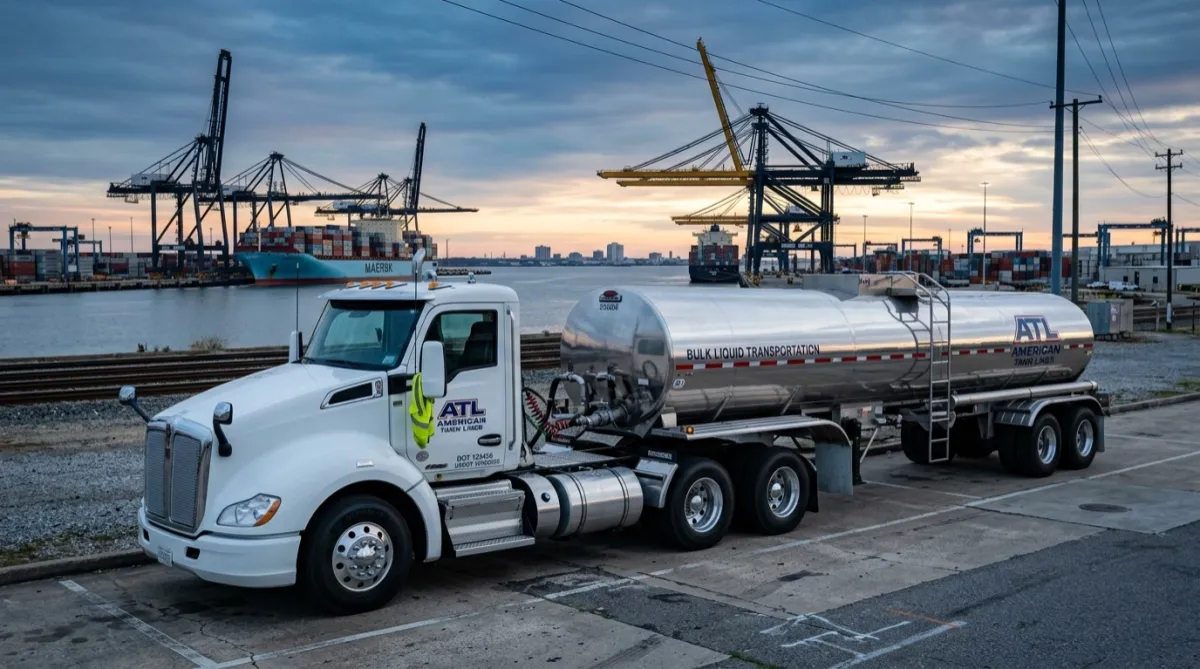
The logistics landscape of the Southeast United States is undergoing a significant shift. While traditional hubs like Atlanta and Savannah continue to hold weight, the Port of Mobile has emerged as a dominant force in industrial logistics. Recent infrastructure investments, including a $366 million project to deepen the ship channel to 50 feet, have positioned Mobile as the deepest container port in the U.S. Gulf.
For logistics managers and supply chain professionals, this growth is not just a statistic: it is a signal. As the port expands its capacity to handle ultra-large container vessels (ULCVs), the demand for specialized bulk liquid transport and reliable ISO tank container transport is reaching new heights.
The Deep-Water Advantage: Why Mobile is Scaling Fast
The completion of the channel deepening and widening project in late 2024 marked a turning point for Alabama’s maritime capabilities. By allowing larger vessels to navigate the port without tide restrictions, the Port Authority has effectively increased the throughput potential for all commodities, including non-hazardous industrial liquids.
This infrastructure surge is matched by a $131 million Phase V container terminal expansion, set to increase berth capacity by 50% by 2026. This scale of investment attracts global shippers who require intermodal connectivity. For companies moving liquid commodities, this means more frequent arrivals of ISO tanks and a greater need for specialized chassis and over-the-road hauling to move products from the port to regional manufacturing sites.
The MAST Initiative: A Catalyst for Chemical Demand
The growth of the port is intrinsically linked to the industrial strength of the surrounding region. The Gulf Coast Chemical Corridor, often referred to as the MAST Initiative (Mobile-Alabama-Saraland-Tuscaloosa area), is a 60-mile stretch home to more than 25 major chemical manufacturers. These facilities produce everything from resins and synthetic rubbers to adhesives and specialty chemicals.
In 2025 alone, Alabama saw over $294 million in capital investment specifically within the chemical manufacturing sector. This industrial density creates a constant, high-volume demand for raw material inflows, finished product outflows, and transloading services bridging rail, port, and truck.
American Tank Lines supports this corridor by providing port and rail transloading services that bridge the gap between global shipping lanes and local manufacturing floors.
Meeting the Demand for Bulk Liquid Hauling
As volume increases, the primary challenge for logistics teams shifts from finding space to finding reliable capacity. The complexities of bulk liquid hauling require more than just a truck; they require specialized equipment and rigorous safety standards.
At American Tank Lines, we have aligned our operations to meet the specific needs of the Mobile industrial corridor through:
- Specialized Equipment: Our fleet utilizes chemical-grade stainless steel trailers equipped with dedicated high-capacity pumps and air-unload capabilities to ensure efficient product transfer without contamination.
- Predictable Performance: We maintain a 98%+ on-time delivery rate, critical for plants operating on lean manufacturing schedules.
- ISO Tank Expertise: With the influx of containerized liquids at the Port of Mobile, our specialized chassis and experienced drivers ensure that ISO tanks are moved safely and efficiently from the terminal to their final destination.
Reliability in a High-Growth Market
Growth without reliability leads to supply chain bottlenecks. In a high-stakes environment like the Mobile port, equipment failure or missed windows can cause cascading delays. This is why preventive maintenance is a core pillar of our strategy. By maintaining a 99%+ fleet uptime, we provide the predictability that large-scale industrial shippers require.
Furthermore, our integration with dispatch tracking systems allows for transparent communication and reduced manual handoffs. For logistics managers, this means less time spent on checking trailer locations and more time focused on high-level supply chain strategy.
Future Outlook: A New Standard for Gulf Logistics
The trajectory for the Port of Mobile is clear. With ongoing investments in rail flyovers and general cargo terminal modernizations, the port is evolving into a comprehensive logistics hub that rivals the largest facilities on the East and West Coasts. For businesses operating in the Southeast, leveraging this growth requires a carrier partner who understands the local nuances of the Mobile-Alabama corridor.