
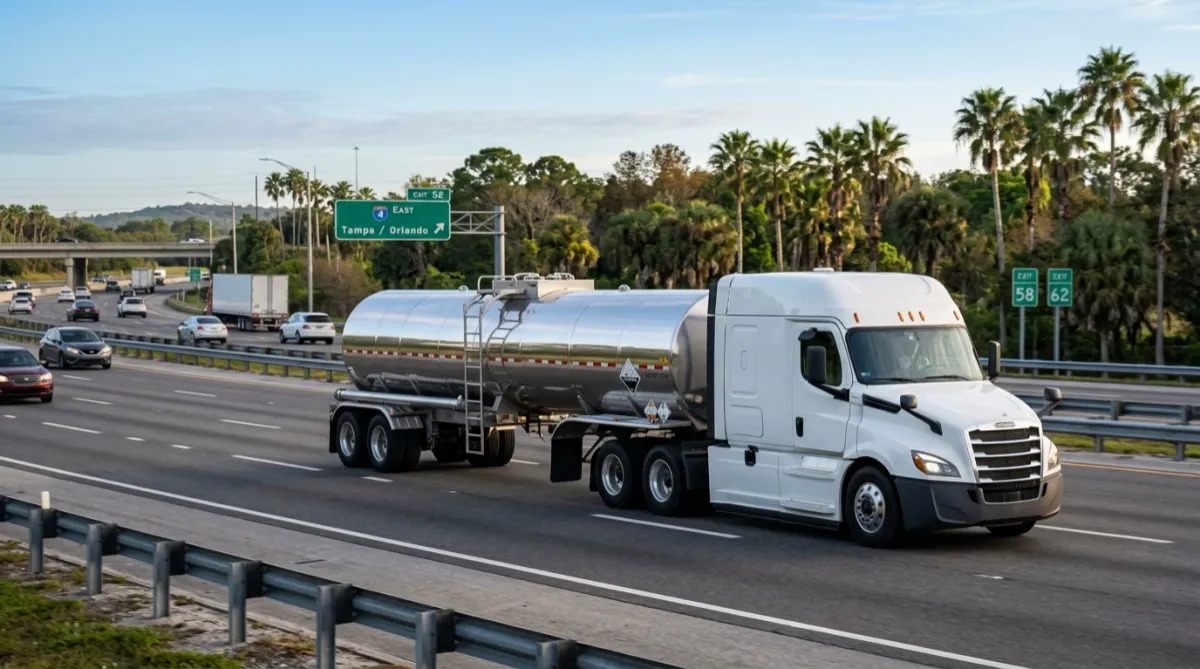
For logistics managers operating in Central Florida, the transition from a warehouse storage facility to the open highway represents a critical link in the supply chain. In the world of non-hazardous bulk liquids—whether it is food-grade ingredients for a processing plant or industrial fluids for manufacturing—the margin for error is slim. Delays at the loading dock or equipment failures on the road do more than just push back an ETA; they disrupt production schedules and inflate costs across the entire operation.
At American Tank Lines, we understand that “rapid” in this industry does not mean reckless. It means operational precision. Orlando’s position as a primary logistics hub requires a specialized approach to bulk liquid transport that prioritizes equipment readiness, driver expertise, and a response time that matches the speed of modern commerce.
The Orlando Logistics Pulse: Why Location Dictates Speed
Orlando is more than just a destination; it is the strategic heart of the Southeast’s infrastructure. With immediate access to I-4, Florida’s Turnpike, and the Beachline Expressway (SR 528), the region serves as a central clearinghouse for liquid commodities moving between major ports and inland industrial centers.
When a shipper needs to move product from a warehouse in the Orlando metro area to a facility in Georgia or the Carolinas, the choice of liquid tanker carriers is the most significant variable in the success of that move. A carrier based outside the region often lacks the local fleet presence to handle short-notice requests. By maintaining a concentrated presence in Central Florida, we ensure that our assets are positioned exactly where the demand is highest, allowing us to maintain a response time of under two hours for regional inquiries.
This geographical advantage is paired with our deep integration into local infrastructure. From navigating congestion on the I-4 corridor to managing timed arrivals at specialized chemical or food-grade warehouses, our drivers are familiar with the operational hurdles of the Florida landscape.
Equipment Readiness and Preventive Maintenance
In the bulk liquid transport sector, uptime is only as good as the maintenance program behind it. A 99%+ fleet uptime rate is not achieved through luck; it is the result of a rigorous preventive maintenance schedule that keeps chemical-grade trailers and tractors in peak condition.
Each move begins with an equipment check that goes beyond standard DOT requirements. Our trailers are equipped with specialized pump and air capabilities, allowing self-loading and unloading at facilities that may lack their own pumping infrastructure. This flexibility is essential for rapid warehouse-to-highway moves, as it eliminates the need for third-party equipment and reduces time at the loading bay.
Our fleet consists of:
- Chemical-grade stainless steel trailers: Designed for the safe transport of non-hazardous industrial liquids.
- Food-grade trailers: Dedicated to the sanitary handling of edible liquid products.
- Specialized chassis: Purpose-built for ISO tank container transport, providing stability and compliance for intermodal moves.
By controlling fleet maintenance and specifications, we remove the technical variables that often cause delays for less specialized carriers.
Streamlining the Warehouse-to-Highway Workflow
The process of moving bulk liquid from a stationary tank or railcar into a road-ready trailer involves multiple handoffs. Each handoff introduces potential delay. We minimize these friction points through a standardized workflow:
- 1. Rapid Dispatch and Response: When a request is received, our dispatch team uses a single point of contact system. This reduces the inefficiency of layered communication. We aim to provide confirmation and ETA within two hours, allowing facility managers to prepare with confidence.
- 2. Precise On-Site Execution: Arrival at the warehouse is the most time-sensitive stage. Our drivers are trained in bulk liquid transportation requirements, from seal integrity checks to temperature-sensitive handling where applicable.
- 3. Transition to the Highway: Once loaded, transit efficiency becomes the focus. With real-time GPS tracking and integrated TMS systems, dispatch monitors the route for disruptions such as construction or accidents. This proactive oversight supports our 98%+ on-time delivery performance.
Port and Rail Integration: The Intermodal Link
Many warehouse-to-highway moves begin at a rail siding or port terminal. As global trade grows, port and rail transloading services have become a critical part of the supply chain.
American Tank Lines bridges this gap by managing the transfer of liquid commodities from railcars or ISO tanks directly into road trailers. This reduces vendor fragmentation and creates a single point of accountability for port drayage, transloading, and final delivery.
Our ISO tank chassis are essential in Central Florida, where international liquid trade depends on safe and compliant inland transport from ports such as Tampa and Everglades to warehouses and production facilities.
Data Transparency and TMS Integration
Modern supply chains require real-time visibility. We integrate with major TMS and EDI systems to provide seamless tracking and communication. This includes:
- Automated status updates across dispatch checkpoints.
- Electronic proof of delivery (ePOD) for instantaneous confirmation.
- Historical compliance reporting to maintain complete audit trails.
These systems reduce manual errors and improve billing accuracy while enhancing operational transparency.
Safety as a Non-Negotiable Standard
Speed and efficiency mean nothing without safety. Our operations are 100% DOT compliant and fully insured for non-hazardous bulk liquid transport.
All drivers are trained in liquid surge management, a critical skill for maintaining stability during transit. This ensures cargo protection, equipment integrity, and brand reliability for our clients.
Partner with the Central Florida Experts
The warehouse-to-highway transition is a high-stakes part of the supply chain. Choosing the right liquid tanker carrier means selecting a partner that understands local infrastructure, maintains high fleet uptime, and meets strict delivery timelines.
American Tank Lines offers flexible service models, from single shipments to dedicated fleet contracts with custom SLAs. To discuss recurring lanes or request a quote, contact our Orlando-based team today.