
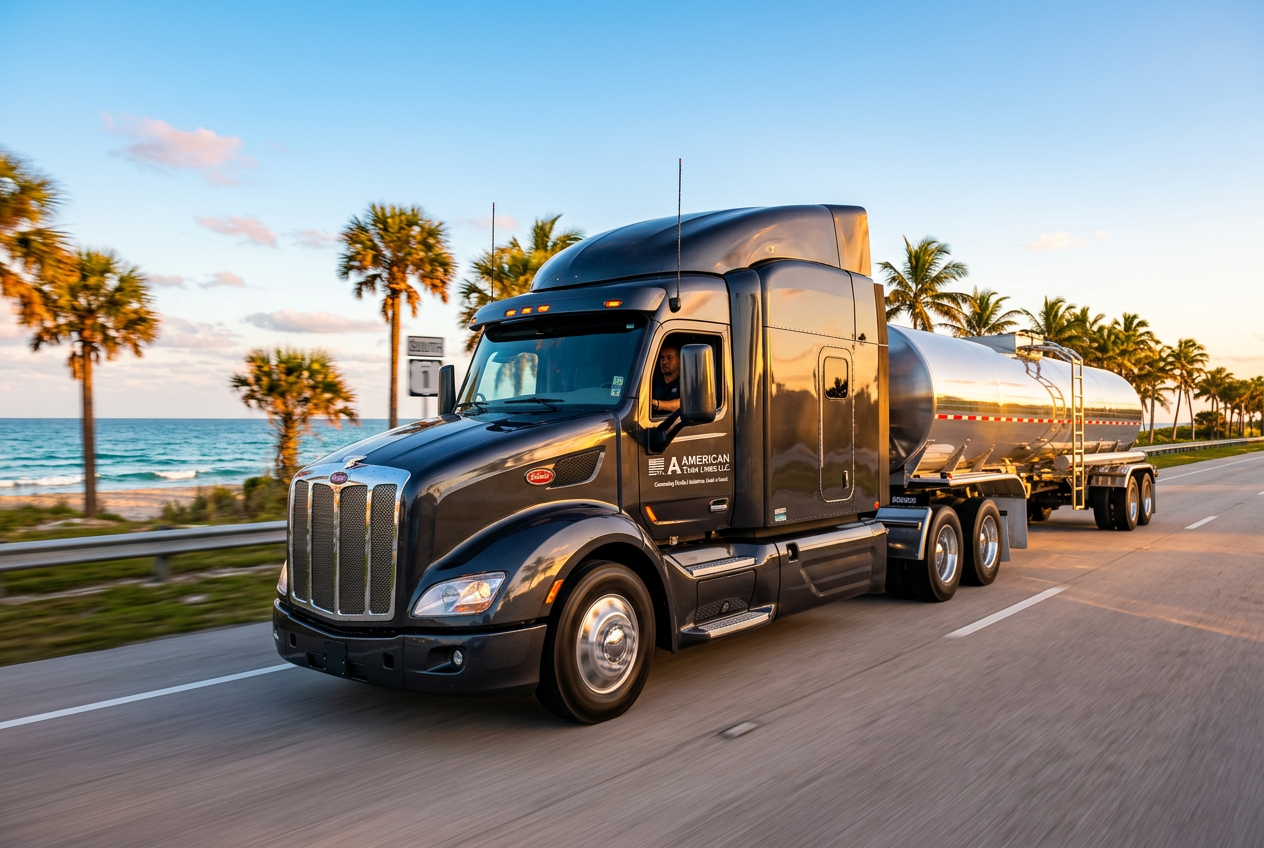
In Tampa’s busy ports, industrial parks, and distribution corridors, non-hazardous bulk liquid transport plays a vital role in keeping local businesses running. From food-grade ingredients to water treatment products, these loads may not be classified as hazardous, but they still demand rigorous load securement to prevent cargo shifting, spills, and avoidable transportation risks. This is where disciplined cargo safety practices and experienced carriers such as American Tank Lines in Central Florida make a measurable difference on the road.
Why Load Securement Matters Even for Non-Hazardous Liquids
It is easy to assume that because a liquid is not classified as hazardous, the stakes are lower. In reality, any bulk liquid that is not properly secured in a tanker can create serious safety issues. When a tanker is partially filled or improperly loaded, the liquid can surge forward, backward, or side-to-side as the vehicle accelerates, brakes, or navigates Tampa’s busy interchanges and port access roads. This movement increases stopping distances, destabilizes the vehicle, and can even contribute to rollovers or jackknifes in extreme situations.
Beyond vehicle control, poor securement can lead to leaks at manways, valves, and fittings, as well as overfill incidents during loading and unloading. Even non-hazardous liquids can cause slick road surfaces, property damage, environmental concerns, and costly cleanup operations. That is why responsible carriers treat load securement as a core part of their Cargo Safety Practices, not just a regulatory checkbox. For companies like American Tank Lines, consistent securement procedures are central to protecting drivers, customers, and the Tampa community at large.
Understanding the Dynamics of Bulk Liquid Transport in Tampa
Tampa’s transportation environment presents unique challenges for bulk liquid transport. Tanker trucks must navigate a mix of interstate highways, local streets, port facilities, and industrial zones, often under tight delivery schedules and in hot, humid weather. These conditions directly influence how loads behave and how securement should be managed throughout the trip.
- Frequent stops and turns: Urban traffic patterns and port access roads mean more braking, accelerating, and cornering, all of which amplify liquid surge if the load is not properly controlled within the tank.
- High temperatures: Florida heat can affect product viscosity, expansion, and tank pressure. Securement and venting systems must account for thermal changes to avoid leaks or over-pressurization.
- Port and plant congestion: Tight spaces and uneven surfaces in loading yards and terminals demand slow, controlled maneuvering and heightened attention to load stability.
An experienced carrier such as American Tank Lines understands these regional realities and builds them into route planning, driver training, and daily safety routines. Effective load securement for non-hazardous bulk liquids in Tampa is not just about what happens at the loading rack; it is about anticipating how the load will behave across every mile of the journey.
Best Practices Before Loading: Planning for Safe Bulk Liquid Transport
Effective load securement begins well before the first gallon enters the tank. Thorough pre-trip planning and equipment checks are foundational Cargo Safety Practices that reduce the chance of cargo shifting and spills later on. Key steps include the following:
1. Selecting the Right Tank and Compartment Configuration
Not all tanker trailers are identical. Some are single-compartment tanks, while others are divided into multiple compartments with internal baffles. Choosing the correct configuration for each non-hazardous product is critical for controlling surge and maintaining vehicle stability. Whenever possible, loads should be distributed across compartments to keep the center of gravity low and evenly balanced from front to back and side to side.
For example, when transporting a moderate-volume order of a food-grade ingredient between Tampa and a nearby processing plant, an operator like American Tank Lines may choose to split the load between two compartments rather than partially filling a single large compartment. This reduces free surface area, limits liquid movement, and improves handling during city driving and ramp merges on I-275 or I-4.
2. Inspecting the Tank, Valves, and Fittings Thoroughly
Pre-load inspections are another cornerstone of safe bulk liquid transport. Drivers and terminal personnel should conduct a systematic check of the tanker, verifying that:
- Manway covers and gaskets are clean, undamaged, and capable of forming a tight seal.
- Internal valves, external valves, and fittings operate smoothly and close fully without leaks or drips.
- Pressure-relief devices and vents are unobstructed and appropriate for the product and expected temperatures.
- Hoses, gaskets, and connections used during loading are compatible with the product and in good condition.
By addressing potential issues before loading, carriers reduce the risk of leaks developing en route, especially when trucks encounter stop-and-go traffic or sudden lane changes typical of busy Tampa corridors.
3. Verifying Product Compatibility and Fill Limits
Even for non-hazardous liquids, it is critical to confirm that the product is compatible with the tank’s construction, lining, and seals. Certain food-grade or industrial liquids may require specific materials to prevent contamination or degradation. In addition, fill limits must be respected to accommodate thermal expansion and reduce the potential for overfill incidents. Standard practice is to avoid filling a compartment to 100% of its capacity; instead, carriers follow product-specific guidelines that balance surge control with safe headspace.
Best Practices During Loading: Controlling Surge from the Start
The loading process itself has a direct impact on how a non-hazardous bulk liquid behaves in transit. Proper techniques help minimize cargo shifting, reduce stress on tank components, and set the stage for a safe journey across Tampa and Central Florida.
4. Loading Evenly and Avoiding Excessive Partials
Whenever possible, tanks should be either filled close to their intended capacity (within safe expansion limits) or filled to a level that significantly reduces free-surface movement. Large, partially filled tanks can create powerful surge forces as the liquid sloshes forward and backward. To manage this, operators often:
- Use multiple compartments to divide the load into smaller volumes with less surge potential.
- Position heavier products in lower or central compartments to maintain a stable center of gravity.
- Follow company guidelines that specify minimum and maximum fill percentages for each product and route type.
Companies like American Tank Lines integrate these loading strategies into their standard operating procedures so that every load—whether traveling across town or across the state—is engineered for stability from the moment it leaves the rack.
5. Monitoring Fill Levels and Preventing Overfills
Overfilling a tanker creates immediate spill risk during loading and increases the likelihood of leaks through vents or manways once the truck begins moving. Best practices include using calibrated gauges, flow meters, and high-level sensors to monitor loading progress, as well as clear communication between plant operators and drivers about target volumes. Visual checks through sight glasses or safe access points can provide an additional layer of verification before hoses are disconnected and the truck departs the facility.
6. Securing All Access Points Before Departure
Once loading is complete, every potential leak path must be checked and secured. This includes manway clamps, washout ports, product valves, vapor lines, and hose connections. Many carriers use standardized checklists to ensure nothing is overlooked. A disciplined walk-around inspection helps catch issues like loose caps or partially closed valves that could otherwise lead to slow drips or sudden spills when the truck encounters braking or a sharp turn in Tampa traffic.
Careful valve and manway inspections dramatically reduce leaks and load-related incidents on the road.
Best Practices on the Road: Driving Techniques That Support Load Securement
Even the best-secured load can be compromised by aggressive driving. That is why professional bulk liquid transport depends on both sound equipment practices and skilled, well-trained drivers. In and around Tampa, where traffic conditions can change quickly, the following driving techniques are essential to minimizing cargo shifting and transportation safety risks:
7. Smooth Acceleration and Braking to Reduce Surge
Rapid starts and hard stops magnify liquid movement inside the tank. Professional drivers are trained to accelerate gradually, anticipate traffic signals, and begin braking early to allow the liquid to settle instead of slamming forward. This not only helps keep the load more stable but also reduces wear on brakes, suspensions, and tank components. In congested Tampa corridors, this kind of defensive driving is a key part of everyday Cargo Safety Practices.
8. Taking Turns and Ramps at Appropriate Speeds
Curves, ramps, and lane changes can cause lateral surge, pushing the liquid toward the outside of the turn and increasing rollover risk. Drivers should always follow posted advisory speeds for ramps and often reduce speed even further when hauling partial loads or products with lower viscosity. Negotiating turns smoothly and avoiding abrupt steering inputs gives the liquid time to adjust, keeping the tanker more upright and controllable across Tampa’s interchanges and port access roads.
9. Adjusting for Weather and Road Conditions
Sudden Gulf Coast rainstorms can turn roads slick in minutes, increasing stopping distances and the likelihood of skids. In these conditions, the dynamics of a liquid load become even more critical. Professional carriers like American Tank Lines train drivers to slow down, increase following distance, and avoid sudden maneuvers when weather or construction zones affect road conditions. These adjustments help keep both the vehicle and the liquid load under control, further reducing transportation safety risks for everyone sharing the road.
Ongoing Inspections: Verifying Securement Throughout the Trip
Load securement is not a one-time event. Conditions can change as a truck travels from Tampa to other parts of Central Florida, and small issues can develop into larger problems if they go unnoticed. That is why best-in-class bulk liquid transport providers emphasize regular inspections and communication throughout the trip:
- En-route walk-arounds: During scheduled stops, drivers should visually inspect manways, valves, and fittings for signs of weeping, dripping, or product stains that may indicate minor leaks.
- Monitoring gauges and indicators: Any unexpected changes in pressure readings, temperature, or product levels should be investigated promptly according to company procedures.
- Reporting concerns immediately: If a driver notices a potential securement issue, they should contact dispatch or safety personnel rather than continuing the trip and hoping the problem remains small.
This proactive mindset is central to the safety culture at companies like American Tank Lines, where drivers are empowered and expected to treat load securement as an ongoing responsibility, not a task to check off and forget.
How Proper Securement Reduces Spills, Shifting, and Transportation Risks
When all of these best practices come together—thoughtful tank selection, disciplined loading procedures, careful driving, and continuous inspection—the benefits are substantial. Proper securement directly reduces cargo shifting, spills, and broader safety risks in several ways:
- Improved vehicle stability: Balanced, well-secured loads keep the tanker more predictable during braking, lane changes, and emergency maneuvers, lowering the chance of rollovers and loss-of-control incidents on Tampa’s highways.
- Fewer leaks and spills: Tight seals, correct fill levels, and secure valves mean that even when road conditions are challenging, product stays where it belongs—inside the tank—protecting roads, property, and the environment.
- Reduced wear and maintenance costs: Minimizing surge and shock loads on the tank and chassis helps extend the life of equipment, reducing unplanned downtime and repair expenses for carriers and shippers alike.
- Enhanced community safety and reputation: Fewer incidents mean fewer disruptions, cleaner roads, and stronger trust between carriers, customers, and the Tampa community.
The Role of Training and Safety Culture in Bulk Liquid Transport
Equipment and procedures are only as effective as the people who use them. That is why leading carriers invest heavily in driver training and safety culture. In Central Florida, American Tank Lines emphasizes ongoing education on topics such as liquid surge dynamics, tanker inspection techniques, defensive driving, and emergency response protocols. New drivers learn not just what to do, but why each step matters for load securement and public safety.
Regular refresher courses, ride-along evaluations, and safety meetings help keep Cargo Safety Practices top-of-mind, even for experienced personnel. When everyone from dispatchers to drivers to maintenance technicians shares a common commitment to safe non-hazardous bulk liquid transport, the result is fewer incidents and more consistent performance on every Tampa-area route.
Partnering with a Safety-Focused Carrier in Tampa and Central Florida
For shippers, one of the most effective ways to manage risk is to partner with a carrier that treats load securement as a core competency. When evaluating bulk liquid transport providers in the Tampa region, it is worth asking detailed questions about their tanker specifications, loading procedures, driver training programs, and incident history. A company that can clearly explain how it prevents cargo shifting, manages partial loads, and responds to potential leaks is far more likely to protect your product and your reputation.
As a Central Florida–based carrier, American Tank Lines understands the specific demands of Tampa’s ports, industrial customers, and regional distribution networks. By combining modern equipment with disciplined Cargo Safety Practices, they help ensure that non-hazardous bulk liquids arrive on time, on spec, and without incident—trip after trip.
Secure Loads, Safer Roads in Tampa
Non-hazardous bulk liquid transport may not always make headlines, but it is essential to Tampa’s economy—from food and beverage production to manufacturing and municipal services. Behind every safe delivery is a combination of smart planning, precise loading, careful driving, and continuous vigilance. When these elements come together, proper load securement dramatically reduces cargo shifting, spills, and transportation safety risks, protecting drivers, businesses, and the community at large.
Whether you are a shipper seeking a reliable partner or a safety professional reviewing your company’s standards, focusing on robust load securement practices is one of the most effective ways to raise the bar. By working with experienced carriers such as American Tank Lines and prioritizing proven Cargo Safety Practices at every step, Tampa’s bulk liquid transport industry can continue to move vital products efficiently—while keeping the region’s roads safer for everyone.