
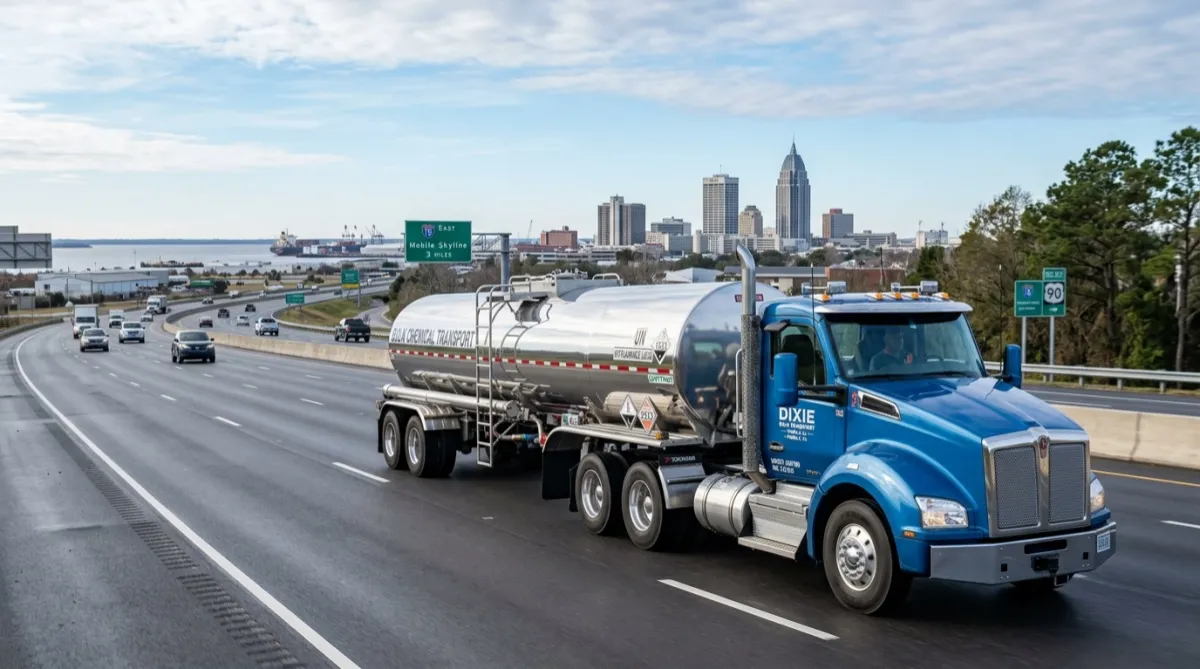
The logistics landscape in Florida is undergoing a fundamental shift. Traditionally defined by its deepwater ports in Jacksonville, Miami, and Tampa, the state's supply chain now centers on the I-4 Corridor and the massive industrial expansion in Central Florida. For logistics managers and supply chain directors, this shift toward Orlando and its surrounding counties represents a strategic pivot toward faster distribution and more localized inventory management.
As the state’s population grows by approximately 1,000 new residents per week, the demand for essential commodities—including food-grade liquids and industrial chemicals—has accelerated. This growth requires a sophisticated approach to bulk liquid transport that can bridge the gap between coastal ports and inland industrial hubs.
The Orlando Pivot: Central Florida as the Logistics Heart
Orlando is no longer just a regional crossroads; it is now a critical distribution hub in the Southeast. The Florida Freight and Logistics Market is projected to exceed $97 billion by 2030, with much of that growth centered inland. This shift is driven by demand for last-mile industrial delivery and high-speed distribution models serving both coasts from one central location.
Industrial Real Estate and Footprint Expansion
The expansion of industrial space in Central Florida highlights the scale of growth. Large Class A warehouse developments are rapidly increasing along the I-4 corridor and Florida’s Turnpike. Investments by firms such as KKR and Dalfen Industrial in recent years signal strong demand for logistics real estate.
For companies moving raw materials, proximity to Orlando has become a competitive necessity. Growth in areas like West Orange County, Lake County, and the Space Coast provides the space needed for transloading and storage before final distribution.
Infrastructure and the I-4 Corridor
The future of Florida logistics depends heavily on infrastructure capacity. The state has allocated $1.7 billion to improve congestion along Interstate 4, the primary route for bulk liquid hauling between Tampa Bay and Orlando.
While infrastructure improvements help, they are only part of the solution. Shippers must work with carriers who understand traffic patterns, regulations, and operational challenges specific to these high-volume corridors.
The Critical Role of Bulk Liquid Transport
Despite the focus on e-commerce and general freight, bulk liquid movement remains essential to Florida’s industrial growth. Manufacturing, food production, and municipal services all depend on steady deliveries of non-hazardous liquids.
Food-Grade and Industrial Commodities
The population increase in Central Florida drives demand across multiple sectors:
- Food production: Requiring bulk food-grade oils, sweeteners, and citrus juices.
- Construction and manufacturing: Needing coatings, industrial resins, and chemical inputs.
- Municipal services: Relying on clean water treatment and environmental chemicals.
Meeting these needs requires specialized equipment. American Tank Lines uses chemical-grade trailers with advanced pumping and air systems to ensure safe and efficient delivery. Reliability and contamination prevention are critical as supply chains become more complex.
Port-to-Interior Connectivity: The Transloading Advantage
A key element of future logistics is efficient connectivity between Florida’s ports and inland hubs. Port and rail transloading services are increasingly used to reduce long-haul trucking costs.
By moving bulk liquids via rail or ISO tank to ports like Jacksonville or Tampa, then transferring to trucks for final delivery into Orlando, companies can lower costs and reduce environmental impact. Specialized ISO tank transport supports international trade while maintaining tight delivery schedules.
Efficiency and Uptime in a High-Growth Market
As demand increases, logistics margins tighten. High traffic and equipment demand make fleet uptime critical. A single breakdown on I-4 can disrupt entire production operations.
We maintain a 99%+ fleet uptime through preventive maintenance and achieve a 98%+ on-time delivery rate. This allows customers to operate with lean inventories and consistent supply.
Technology Integration
Modern logistics relies heavily on digital systems. Integration with TMS and EDI platforms reduces manual processes and provides real-time visibility.
With fast response times and accurate tracking, companies can monitor shipments from port to final destination with full transparency.
Preparing for the 2030 Supply Chain
Central Florida’s industrial expansion is a long-term trend. Businesses must position logistics operations near the state’s center, leverage port connectivity, and partner with carriers that prioritize reliability and compliance.
The future of Florida logistics will depend on precision, technology, and regional expertise. American Tank Lines continues to support this growth with specialized bulk liquid transport services.
For companies looking to optimize their logistics strategy, now is the time to act. Whether you need a single shipment or a dedicated fleet, we provide the reliability and performance required to operate in Central Florida’s evolving industrial landscape.
To learn more or request a quote, contact our dispatch team today.